Trial of Fabrizio Collini for Murder
The Collini CaseThe Trial of Fabrizio Collini for Murder turns a seemingly straightforward prosecution into an inquiry into how postwar law handled Nazi-era crimes. At first, the court sees an elderly man accused of killing an old acquaintance, with no motive established. Caspar Leinen’s questions eventually reveal that Fabrizio Collini had previously reported Hans Meyer for ordering his father’s execution, only for the investigation to be discontinued under a limitation rule. The hearing’s central shift is from the fact of the killing to the history and legal treatment that help explain it.
Preparation and Opening
The 12th Criminal Court authorized the murder charge and planned a ten-day main hearing. The initial schedule called for no evidence on the first day, with a psychiatric expert present to assess Collini later. The expected witnesses included guests and employees of the Hotel Adlon, police officers who had questioned Collini, a forensic pathologist, and a ballistics expert. The presiding judge believed the course of the case was clear enough to set aside a limited period for the trial.
At the opening, Senior Public Prosecutor Reimers read the brief arraignment. The judge explained Collini’s right to remain silent and asked through Leinen whether he wished to speak. Leinen replied that they had not decided. In a private exchange after the session, the judge pointed out that the victim was eighty-five, Collini sixty-seven, and that Collini had no previous convictions and had led a blameless life. Despite lengthy investigations, no motive had been found. She asked the lawyers to alert the court if they planned a statement, making plain that the unexplained motive would matter to the proceedings.
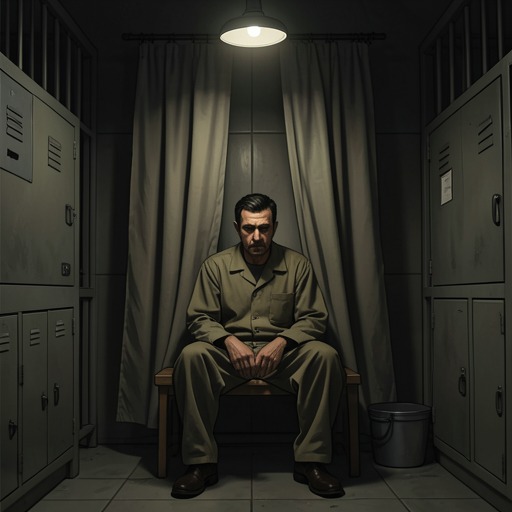
Collini continued to withhold an explanation. After a brief first meeting with Leinen, he left without a handshake, then stopped in the corridor and returned to thank his lawyer. Their conversation had lasted less than fifteen minutes. The gesture did not explain the crime, but it established a restrained, personal connection between a defendant who would not discuss his case and the young lawyer obliged to represent him.
Evidence and the First Impression
For the first five days, witnesses and experts presented evidence already given to police. The judge was thoroughly prepared and appeared impartial; Reimers asked few questions. Richard Mattinger, by contrast, shaped the court’s understanding through sustained questioning of Professor Wagenstett, the forensic pathologist. He asked about the shooting evidence and other forensic findings, and pressed for technical medical language to be rendered in terms the lay judges and public could follow.
Mattinger’s method built a coherent image of the killing without relying on theatrical gestures or a raised voice. He let the testimony and photographs form the impression in listeners’ minds. By the end of the evidence, the case seemed routine, press interest was fading, and newspapers described Collini as possibly insane. The trial was then adjourned for ten days after one of the two women lay judges fell ill. This pause interrupted a hearing that had appeared to be moving toward a predictable conclusion.
Leinen’s Statement and the Historical Record
When Leinen finally addressed the court, he read slowly from a prepared statement, consulting the files in Ludwigsburg and relaying what Collini had told him. He looked up only occasionally, meeting the judges’ eyes in turn. The language was dry and legal, but the account transformed the courtroom’s sense of what a case file could contain: the history of people, places, and communities rather than only a sequence of procedural facts. In presenting that history, Leinen himself recognized that criminal proceedings concerned abused human beings as well as legal classifications.
The decisive turn came during Dr Sybille Schwan’s testimony. After Mattinger asked whether Hans Meyer had been questioned, Schwan said he had not. She confirmed that the Stuttgart Public Prosecutor’s Office had discontinued its investigation into Meyer on 7 July 1969. Mattinger treated the testimony as closing off the accusation against Meyer, and the courtroom’s attention shifted to Collini, who sat with his head bowed and tears on his face.
Leinen then interrupted the move to discharge Schwan. He asked who had brought the charges against Meyer. Schwan identified Collini. The revelation changed the meaning of Collini’s silence: he had once approached the authorities, named the man he said had his father shot, and supplied what evidence he could. Leinen established that the investigation had ended because the alleged conduct was subject to a statute of limitations under a law that came into force on 1 October 1968. According to Schwan, there had been no subsequent investigation of Meyer’s guilt or innocence.
The Law, Motive, and Judgment
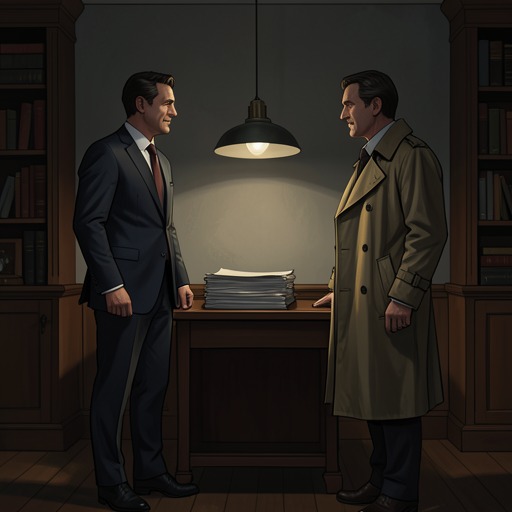
Mattinger objected that Leinen was turning a criminal trial into a history lecture and argued that the legislators were not on trial. Leinen answered that the history mattered to the question of guilt because the motive could bear on whether the killing was arbitrary or understandable. The presiding judge allowed the inquiry on that basis, treating motive as potentially decisive rather than collateral.
Leinen tested the legal and historical framework with specific questions. Schwan explained that once an offense had become subject to a statute of limitations, the ruling could not simply be reversed under a constitutional state governed by the rule of law. Leinen picked up a volume of legal commentary from the judges’ table and asked about Dr Eduard Dreher, whose widely used criminal-law commentary, co-authored with Tröndle, was found on the desks of judges, prosecutors, and defense counsel. The physical book brought the name and authority of legal commentary into the hearing, where the consequences of the law were being examined.
Schwan distinguished contemporary judgments from those prevailing in the 1950s and 1960s. She referred to the Auschwitz Trials of 1963–1965 and the later public impact of the television series Holocaust, watched by millions in the late 1970s. Asked how a court would assess Meyer’s conduct today, she said the Federal Supreme Court would regard him as an accessory to murder. The historical account therefore did not erase the fact that Collini had killed Meyer; it altered the legal and moral context in which the court had to assess responsibility and motive.
Aftermath and Significance
The new evidence led the judge to revise the schedule and ask the parties to remain available for further sessions in the following weeks. The trial had moved beyond its initial plan, but the excerpt does not provide a verdict. After the courtroom emptied, Collini told Leinen that he did not think they had won. He reflected that the dead did not seek revenge; the living were the ones who wanted it, and said that he spent his days in his cell thinking about this. He then stood and shook hands with Leinen. His words hold open a distinction the legal hearing cannot settle: exposing the history behind an act is not the same as undoing it, or claiming that the living have achieved justice.
The trial’s importance extends beyond its unfinished courtroom outcome. In January 2012, a few months after the novel’s original German publication, the Federal Minister of Justice appointed a committee to reassess the mark left on the Ministry of Justice by the Nazi past; the novel was one of its points of reference. The fictional hearing thus places questions of evidence, limitation, and accountability before the court, while its later reception connects those questions to a public reassessment of institutional history.